Up to 10% Off Select Skip Bins - This Month Only
Up to 10% Off Select Skip Bins - This Month Only
Up to 10% Off Select Skip Bins - This Month Only
Up to 10% Off Select Skip Bins - This Month Only

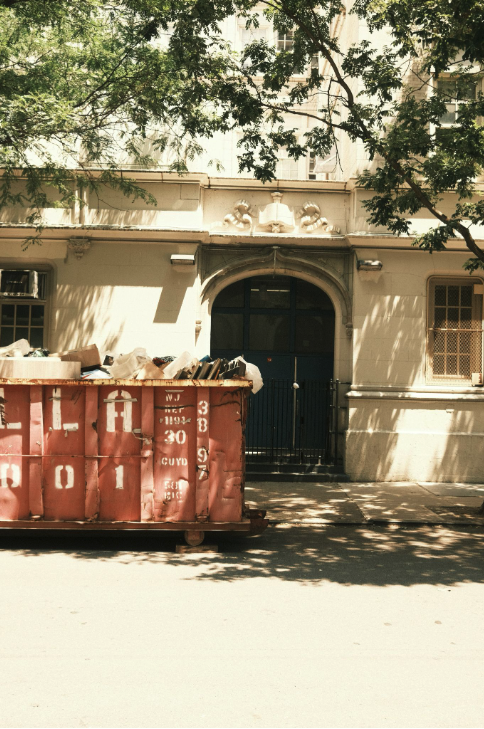
Moving house is one of those experiences that reveals things about how you’ve been living that ordinary daily life keeps hidden. The shed that’s been accumulating things for a decade. The spare room that became a storage room and then a storage room for things that didn’t fit in the other storage room. The garage whose floor hasn’t been fully visible since the last move. When the boxes come out and the packing begins in earnest, the quantity of things that aren’t coming to the new place becomes apparent very quickly.
In Sydney, where many moves involve downsizing from a larger family home to something more manageable, or clearing out a property before a sale, or transitioning between rental properties with different configurations and storage, the waste generated by the process is consistently more than the household rubbish collection can handle and more than a few trips to the tip can efficiently address. A skip bin that’s in place before the sorting begins is a different kind of moving tool from the ones most people think about, and the moves where one is booked early are consistently smoother than those where waste management is figured out mid-process.
The waste categories that a typical Sydney house move produces are broader than most people account for when they’re planning the move, and understanding them in advance is what allows the waste removal to be planned proportionally rather than improvised reactively.
Furniture that’s not making the trip is the highest-volume waste category for most moves. The couch that was fine for the current living room but won’t fit the floor plan of the new one. The wardrobe that’s been discussed as a potential charity donation for three years and is finally being addressed because it physically cannot be moved to a house two suburbs away. The dining table that served a family of five but has no place in the apartment being moved into. Furniture is bulky, difficult to transport in a standard car, and rarely accepted by council kerbside collection services in the quantity a move generates.
Appliances are the second category. The second fridge that lived in the garage. The washing machine that was being replaced at the next convenient opportunity. The dishwasher that came with the house and was never used. White goods that are too large for a bin bag and too heavy to carry far without assistance are exactly the kind of waste that a skip bin addresses efficiently.
Packing material accumulates as the move progresses. Boxes that were sourced and then found to be the wrong size. Bubble wrap that protected things that didn’t need protecting. The packaging from items bought specifically for the new house that arrived before the move was complete. This is lighter waste but occupies significant volume, and it accumulates fastest in the days immediately before and after the moving truck.
The miscellaneous category is the one that surprises most people. The collection of things discovered in drawers, under beds, in the roof space, and at the back of cupboards that weren’t seen often enough to be thought about but are too numerous to simply throw in the household bin. Broken items that were kept because they were going to be fixed. Clothes that were being kept for some unspecified future occasion. Objects whose purpose nobody in the household can now identify. Every move produces this category in quantity, and it requires a destination beyond the ordinary bins.
The timing of when a skip bin arrives relative to the move itself has a larger effect on how smoothly the process goes than most people anticipate before they’ve experienced a move with one and a move without one.
The most effective approach is to have the bin delivered at the start of the sorting phase rather than at the end of the packing phase. When the bin is there before the sorting begins, everything that’s not coming to the new place has somewhere to go immediately rather than being stacked in a corner, moved again when it’s in the way, and then dealt with in a rush in the final days before handover. The property stays clearer throughout the process, which makes packing and moving easier and leaves the house in better condition for the final clean.
Removalists work more efficiently in a property that isn’t partially obstructed by waste that’s waiting to be dealt with. The path from room to truck that should be clear isn’t, because the furniture that isn’t going to the new place is still in the rooms where it was, waiting for someone to figure out what to do with it. A skip bin that’s been filled progressively as the sorting happens means the only things left in the property on moving day are the things being moved, which is exactly the condition a smooth moving day requires.
Timing the bin’s collection date slightly after the moving truck departs allows any final packing material and post-move waste to be added before pickup, which means the bin serves both the pre-move clearout and the post-move cleanup in a single hire. Leaving the bin for one to two days after the truck leaves produces a more complete cleanup than booking collection for moving day itself.
For anyone ready to get the process started, book a skip bin online through Sydney Waste Aus in under two minutes, selecting the suburb, waste type, and delivery and pickup dates, and the bin arrives on the scheduled date without requiring any further coordination. The four-step booking process takes less time than a phone call and can be completed at any hour.
The bin size that suits a house move is determined by the volume of waste the move generates, which is in turn determined by how much isn’t going to the new place and how large that material is. Furniture and appliances are the variables that most affect size selection because they occupy significantly more space relative to their weight than renovation debris or general rubbish.
A studio or one-bedroom apartment move that’s primarily producing packing materials and a modest amount of unwanted items typically suits a three to four cubic metre bin. A two or three bedroom house move with furniture, appliances, and the accumulated contents of garages and spare rooms typically requires five to seven cubic metres. A larger family home move, particularly one that involves clearing out a property that has been lived in for many years, often needs seven cubic metres or more.
The consistent advice for moves is to size up rather than size down when the estimate is uncertain. A bin that’s larger than needed costs the difference between two size options. A bin that’s too small requires a second hire, which involves additional delivery and pickup fees, the delay of waiting for the second bin, and the accumulation of overflow waste in the property while the first bin is being collected and the second is being delivered. The difference in cost between choosing correctly and choosing one size larger is considerably smaller than the total cost of undersizing.
The waste type selection at booking affects pricing more than most movers realise. Moving waste is almost always general waste, which carries the standard pricing. The waste type category that attracts significantly higher pricing is soil, which rarely features in a house move. Selecting the correct waste type at booking ensures the pricing reflects what’s actually going in the bin rather than being corrected after collection when the load has been assessed.
The difference between a move where the waste was planned for from the beginning and one where it was managed as an afterthought is visible in how the final days before handover go. The property that’s been progressively cleared with a skip bin in place is a property that’s ready to clean rather than still in the process of being sorted. The final walkthrough before handing over the keys covers a house rather than a storage situation that happens to have boxes in it.
The new property also benefits from the same approach applied in reverse. A skip bin during the early weeks in a new house, when the things that don’t have a place and don’t belong in the new space are being identified and dealt with, completes the move in a way that simply unpacking and arranging doesn’t. It resolves the overlap between what was brought and what was actually needed, which is an overlap that most moves produce and that most households manage slowly across months after the move rather than efficiently in the first weeks.
The move that treated waste removal as a first-order logistical consideration rather than an afterthought is the move that finishes when the truck does rather than weeks later when the last load finally finds somewhere to go.
Rising fuel prices and waste disposal costs have increased the cost of our services. Rather than increasing our bin hire prices, we've introduced a small 4.5% surcharge to help cover these additional expenses.
We may review or remove this surcharge as costs stabilise.
Thank you for your understanding and for supporting a local Sydney business.